

 Contact
  New
New 

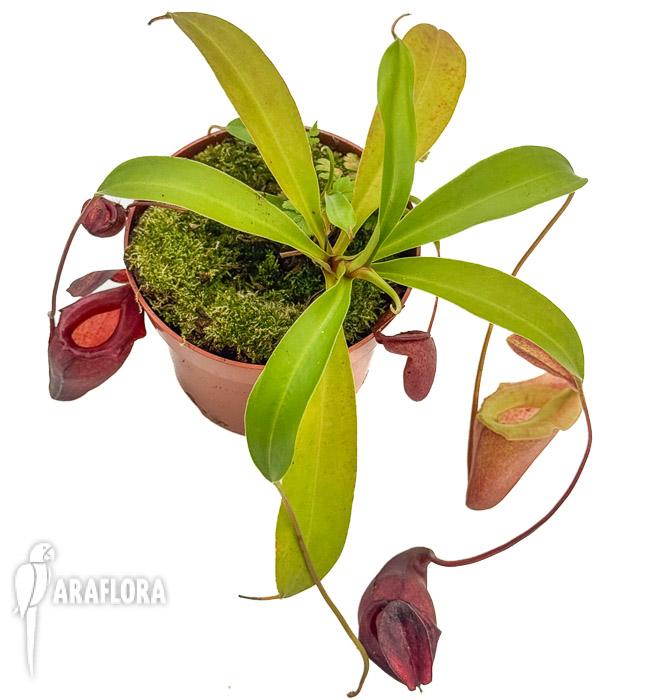
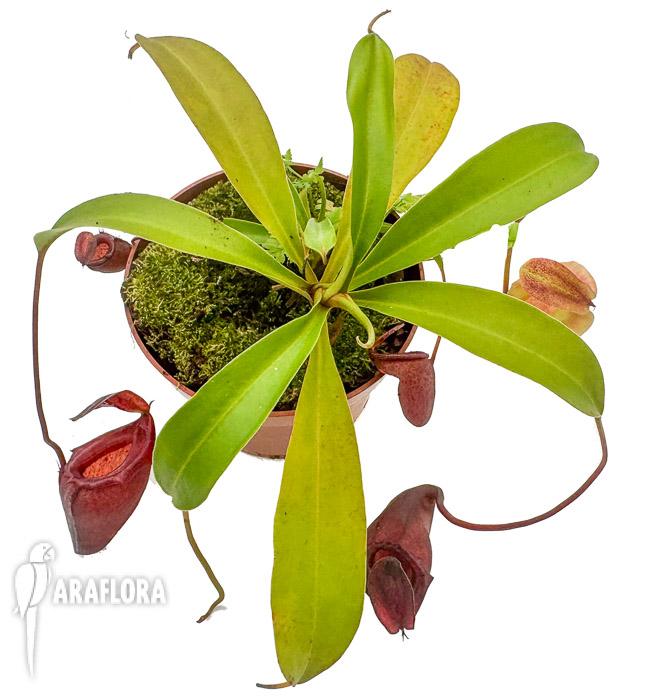
Nepenthes flava 'XL' - CarniNep25c




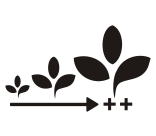
Normal to care for

Indoor

Semi sun
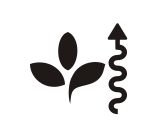
Carnivorous
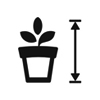
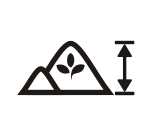
 25 cm
25 cm
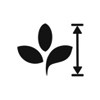
 12 cm
12 cm
Nepenthes flava 'XL' - CarniNep25c
Nepenthes flava – Elegant yellow pitcher cups from the Sumatran highlands. The Nepenthes flava is a rare and botanically fascinating carnivorous pitcher plant that makes a valuable addition to the collection of any experienced grower. This unique highland species is distinguished by its characteristic, bright yellow funnel-shaped upper pitchers and a refined growth habit of high aesthetic and scientific value.


This product is currently still in stock
Share this plant? Press on one of the following icons.
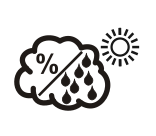
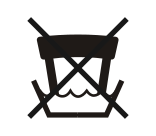
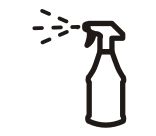
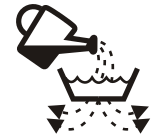
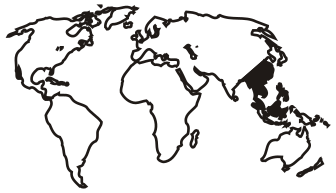
The Nepenthes flava is a compact, perennial, and climbing carnivorous plant. Long tendrils develop at the tips of the lanceolate, bright green leaves, from which the pitcher cups form. The lower pitchers are relatively stocky and robust with a wide peristome (pitcher rim). As the plant climbs, the form transforms into the striking upper pitchers: these are funnel-shaped, elegantly slender, and turn bright yellow to yellow-green – from which the plant derives its specific name 'flava' (Latin for yellow). The interior of the pitchers contains digestive enzymes with which insects are effectively trapped and digested. This unique highland species is endemic to the Barisan Mountains in northern Sumatra, Indonesia. In nature, the plant thrives exclusively in mountainous, tropical cloud forests at altitudes between 1,800 and 2,200 meters above sea level. It grows primarily terrestrially in mossy forests dominated by Rhododendron and Leptospermum vegetation, often in spots where the sun breaks through the canopy. The species was officially described scientifically in 2007 by botanists Wistuba, Nerz, and Fleischmann. Due to its very specific and limited natural habitat, the Nepenthes flava is a highly exclusive occurrence in botanical culture. Additional information about the Nepenthes flava can be found using the Araflora plant symbols displayed below.





Care of the Nepenthes flavaAs a true highland species, the Nepenthes flava presents a challenge for the enthusiast, as it requires specific climatic conditions. Follow these guidelines to keep the plant in optimal condition:Light: The plant requires plenty of bright, indirect light. Direct afternoon sun must be avoided to prevent scorching of the leaves, while too little light hinders the formation of new pitchers.Temperature & Diurnal Cycle: This is crucial for highlanders. During the day, the plant prefers temperatures between 20°C and 25°C. At night, a significant temperature drop is necessary to around 10°C to 15°C.Water & Humidity: Keep the medium constantly slightly moist, but avoid stagnant water at the roots. Use exclusively lime-free water (such as rainwater, distilled water, or reverse osmosis water); tap water is harmful. The plant requires a high humidity level of 60% to 80%, which can be supported by regular misting.Substrate & Feeding: Use an extremely airy, nutrient-poor, and well-draining mix, preferably based on live or long-fibered sphagnum moss mixed with perlite and optionally some orchid bark. Never give the plant regular plant fertilizer or manure, as this will cause irreparable damage to the roots. The plant captures its nutrients independently from trapped insects.Additional care information for the Nepenthes flava highland pitcher plant is provided via the Araflora symbols below.