


 Contact
  New
New 


Drosera cistiflora - CarniDr21a

Normal to care for

Indoor

Full light

Carnivorous
 8 cm
8 cm
 8 cm
8 cm
Drosera cistiflora - CarniDr21a
Drosera cistiflora – South African sundew- grows during the wet winter months in South Africa. There this striking carnivorous plant colours the rolling landscape with its large blossoms. It bears some of the most remarkable, oversized flowers of any sundew—strongly reminiscent of poppies. At home it thrives on a bright windowsill, where you can watch it feed on small flies and other insects.


Currently not in stock
€ 14,00
Keep me up to date?
Araflora will inform you as soon as the product is available again. Please fill in your e-mail address and we will let you know as soon as the product is back in stock. You will get an e-mail message when the product is available again. Unfortunately we cannot say how long this will be or what the price is likely to be.

Receive an e-mail when new stock of this plant arrives.
Share this plant? Press on one of the following icons.
The name cistiflora literally means “with flowers like the rockrose,” referring to its resemblance to a local South African cistus-like plant. Flower colours range from pure white to deep purple and rich red, making each plant unique. Appearance & growth
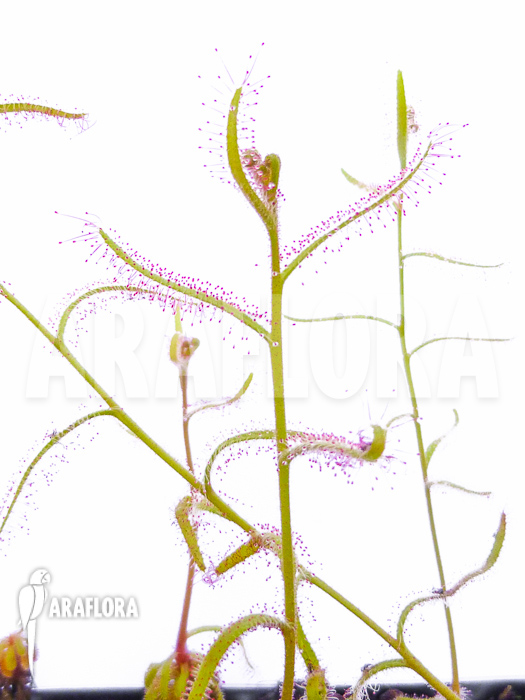
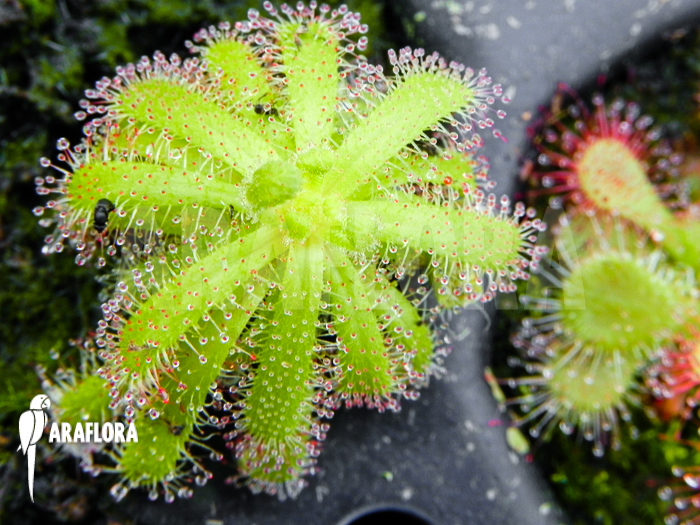
Young plants first form a small rosette of thread-like leaves. As the plant matures, a sturdy stem develops, reaching up to 40 cm tall. Along this stem, alternating sticky leaves are covered with shimmering dew glands that trap small flies and other insects, which are then digested by enzymes. With its elegant habit and sparkling “dew,” this species is both functional and a genuine eye-catcher for windowsills and terraria. The araflora symbols below will give you some information for this plant.












Care for the Drosera cistiflora
Care Light: Very bright, ideally with direct sun (bright windowsill or strong grow light). Water (active season – autumn/winter): Keep the substrate consistently lightly moist. Always use rain or distilled/RO water to avoid mineral build-up; a water tray under the pot works well. Water (summer dormancy): The plant retreats to a small resting bud—give very little water then. Humidity: ~70% promotes well-formed, glistening droplets. Temperature: Normal room temperatures are fine; natural day–night fluctuations are beneficial. Substrate: Sandy, airy mix—e.g., 2 parts washed sand : 1 part sphagnum peat. (Sphagnum and supplies are available in our Plant Accessories section.) Feeding: Optional. You may offer small insects (e.g., fruit flies) occasionally; do not overfeed to prevent mould. If needed, surface-sterilise prey with alcohol or a mild fungicide. Grooming: Remove spent flowers and scapes. A distinctive sundew with poppy-like blooms, capable of reaching up to 40 cm—a standout for any collector of exotic carnivorous houseplants.