


 Contact
  New
New 


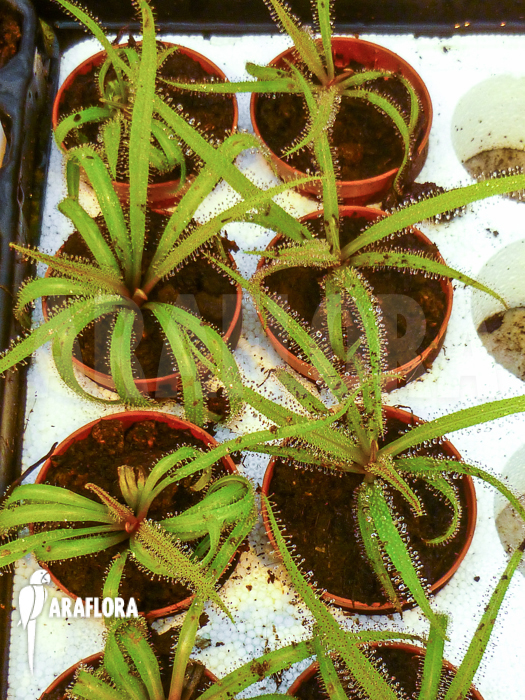
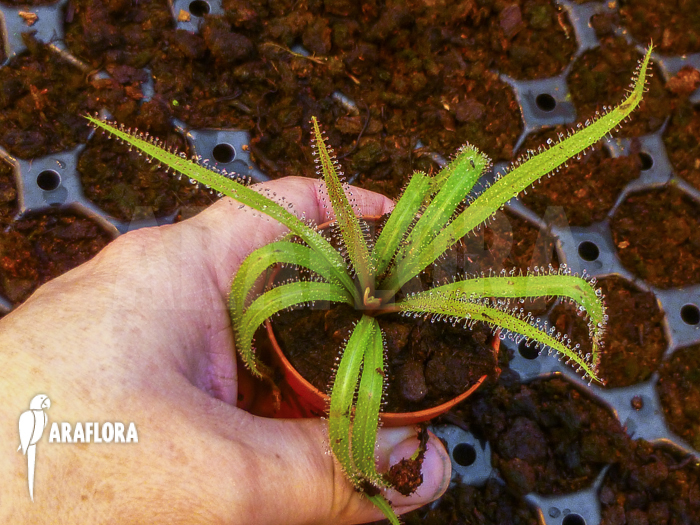
Drosera regia 'Starter' - CarniDr61b

Normal to care for

Indoor

Full light

Carnivorous
 8 cm
8 cm
 6 cm
6 cm
Drosera regia 'Starter' - CarniDr61b
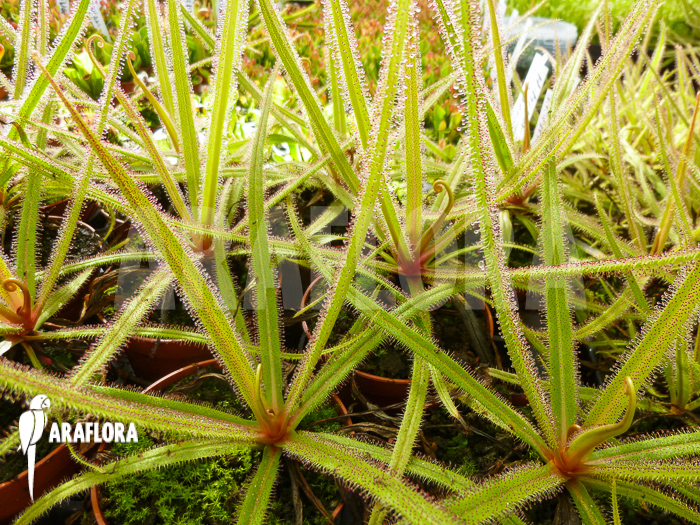
Drosera regia (king sundew) is one of the most impressive carnivorous plants in the world. This spectacular sundew can grow exceptionally large and thrives on a windowsill or in a terrarium with plenty of (artificial) light. Thanks to its majestic appearance and powerful trapping mechanism, Drosera regia is an absolute must-have for every carnivorous plant collector. Native to KwaZulu-Natal in South Africa, it stands out for its large, elegant leaves and highly active carnivorous behaviour. ...
Easy to care for with the right growth environment.


This product is currently still in stock
Share this plant? Press on one of the following icons.
Drosera regia is endemic to a single tiny valley in South Africa. The leaves of Drosera regia can grow up to 50 cm tall and possess stalked glands and tentacles capable of capturing large beetles, moths and butterflies. Insects become trapped in sticky mucilage, The tentacles and leaves are capable of responding to prey by bending towards the trapped insects and wrapping tightly round them. Drosera regia was first scientifically described in 1901 by the South African botanist Selmar Schönland. The species immediately attracted attention due to its exceptional size and unique leaf structure, which clearly distinguishes it from other Drosera species. While many sundews remain compact, Drosera regia can develop leaves up to 70 cm long, earning it the nickname “king of the sundews.” This carnivorous plant belongs to the family Droseraceae and is native to KwaZulu-Natal (South Africa). In the wild, it grows in moist, well-drained soils in open, sunny grasslands. Due to habitat loss and collecting pressure, Drosera regia has become rare in its natural environment. Characteristic of Drosera regia are its long, narrow leaves with sticky tentacles that capture insects. The tentacles slowly move to secure the prey, after which enzymes digest the insect and release essential nutrients. The plant produces large, usually white flowers on long flower stalks that rise above the leaves, ensuring insect capture is not hindered. For additional information about Drosera regia, please refer to the Araflora product symbols for this species.












Care of Drosera regia Drosera regia grows best in an airy, acidic substrate, such as a mix of peat, sand, and perlite. The soil should always be kept slightly moist, but the plant should not stand permanently in water. Due to its woody, deep root system, a deeper pot is recommended. This sundew requires a lot of light and can tolerate full sun, provided temperatures ideally remain below 25°C. During winter, the above-ground parts may die back, but the plant survives through its roots and resprouts in spring. At Araflora, Drosera regia plants have even survived temperatures down to 0°C. Please note: if Drosera regia is kept without light for several days, the leaves may quickly discolor and die back, which can happen during shipping. By placing the plant in a taller pot with sufficient root space and plenty of light, it will usually recover quickly and produce new leaves.
- Light: Very bright; tolerates full sun if below 25 °C.
- Temperature: 10–25 °C; can briefly survive 0 °C when roots are protected.
- Water: Keep soil moist but not waterlogged.
- Substrate: Airy mix of sand, peat and perlite in a deep pot to allow woody roots to develop.
- Feeding: Catches its own insects; avoid overfeeding.
- Dormancy: Leaves may die back in winter; plant regrows from roots.
Plant care tip: After shipping or dark periods, leaves may die—new ones appear quickly under good light.
A royal species every collector should have – large, elegant and impressive.