


 Contact
  New
New 


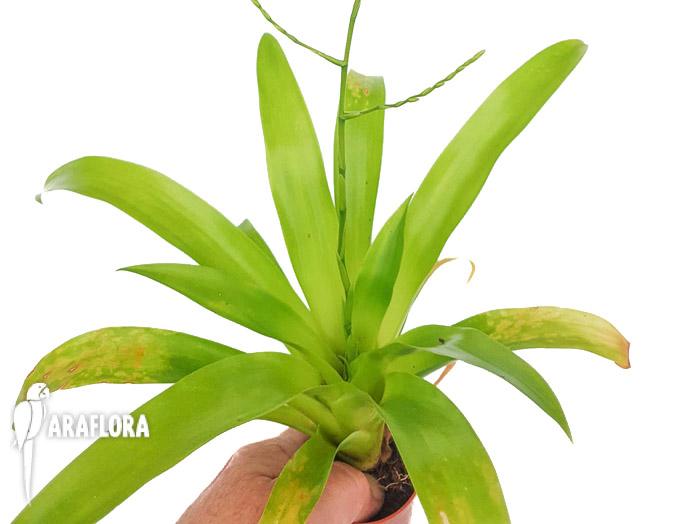
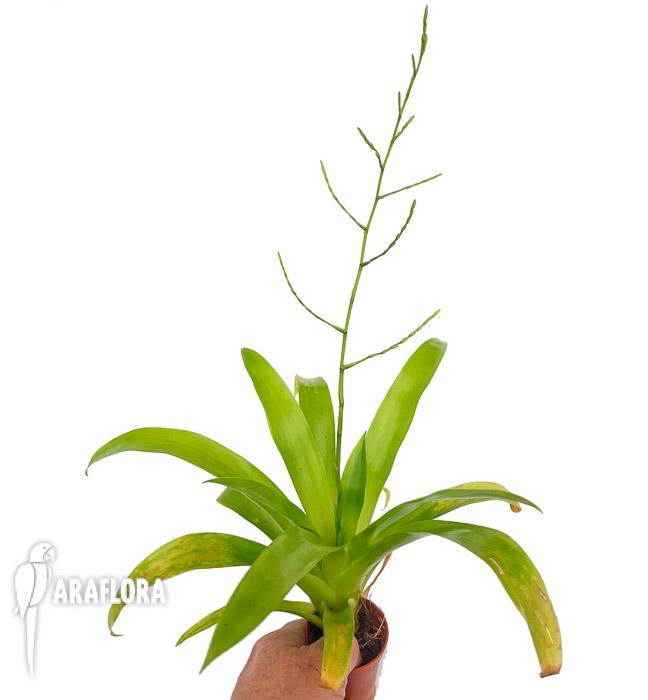
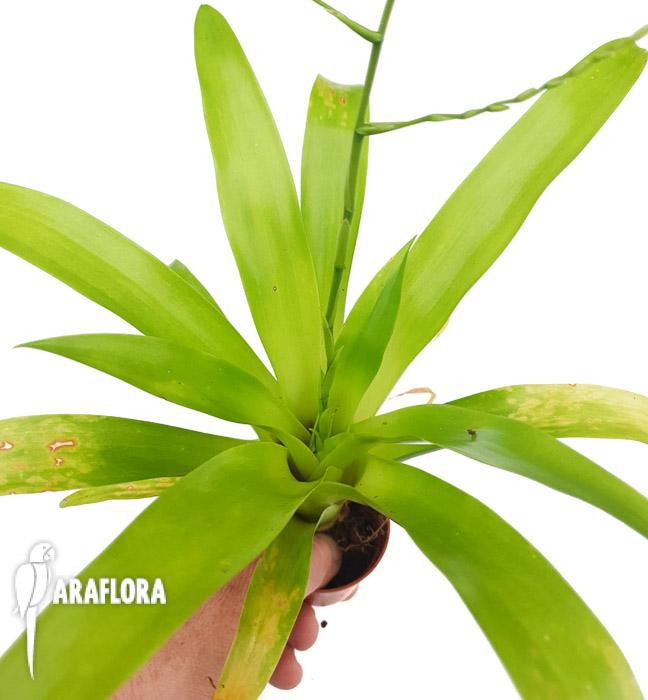
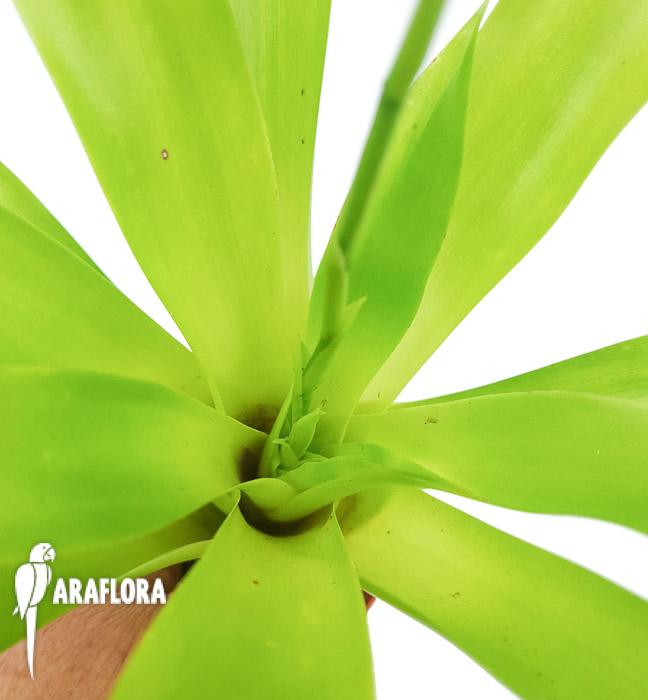
Racinaea tenuispica - Brom274a

Easy to care for

Indoor

Semi sun

Flowering colour
 10 cm
10 cm
 7 cm
7 cm
Racinaea tenuispica - Brom274a
Racinaea tenuispica is an elegant bromeliad native to the cloud forests of Venezuela and Ecuador. This unusual Racinaea tenuispica belongs to the Racinaea genus within the bromeliad family and has delicate, slender inflorescences. This unusual bromeliad species is a real eye-catcher for plant lovers and is suitable for larger paludariums or on a windowsill indoors.


This product is currently still in stock
Share this plant? Press on one of the following icons.
This Bromelia species often grows epiphytically in nature, which means that it lives on trees or rocks without extracting nutrients from them. Instead, the plant obtains its water and nutrients from the air, rain and organic material that accumulates around its roots. This makes Racinaea tenuispica a plant that adapts well to its environment, but also requires specific care conditions to thrive in a domestic setting. Botanically, Racinaea tenuispica belongs to the Bromeliaceae family, which is known for its adaptability and decorative value. For additional information about this bromeliad species from Araflora, please refer to the symbols below.










When caring for Racinaea tenuispica, it is important to take its natural habitat into account. The plant thrives best in bright, indirect light, whereby strong midday sun should be avoided to prevent leaf burn. Water regularly, preferably with rainwater or low-lime water; the roots may dry out slightly, but should never dry out completely. Higher humidity supports the health of the plant, and regular misting helps to create a climate similar to its natural cloud forests. In terms of temperature, Racinaea tenuispica likes moderate to warm conditions and cannot tolerate frost. The substrate should be airy and well-drained; epiphytic mounting on bark or a special bromeliad substrate is ideal. Occasionally, the plant can be fertilised with a light bromeliad-specific fertiliser to support growth and flowering. The flowering of Racinaea tenuispica, with its fine, narrow inflorescence, can be stimulated by a stable climate and sufficient light. To maintain the plant optimally, it is important to regularly remove dust or dirt from the leaves, remove dead leaves and watch for signs of drying out or overwatering. For additional care information, see the Araflora symbols and the explanation below.